Every orthopedic chart, reviewed before it bills
Orthopedic practices bill office visits, injections, imaging, fracture care, and bracing, often while a patient is inside a surgical global period. Charta uses AI to correct undercoded E/M, check global period and laterality modifiers, and catch missed drug and supply codes before the claim goes out.
In orthopedics, modifiers decide what gets paid
A visit for an unrelated problem during a 90-day global period needs modifier 24. The visit where the decision for surgery is made needs modifier 57. A joint injection needs the right laterality and a separate code for the drug. A brace dispensed in clinic needs its own code and supporting documentation. When your team can only audit a sample of charts, the rest go out unchecked.
Coding and compliance checks on every encounter
Charta's CPC-certified team translates your audit checklist, including your global period, modifier and DME rules, into an autonomous AI engine for pre-billing chart review.
100%
Charta reviews every encounter note for revenue integrity.
13%
Revenue leak attributed to coding errors
Global periods hide billable work.
An unrelated visit inside a global period looks like bundled post-op care unless the documentation and modifier say otherwise. Reviewing every encounter catches it before the claim goes out.
Built around your EHR workflow, not on top of it
Charta works between the signed note and the claim, the same window your coders and billers already work in. Providers keep documenting the way they do today, and your Charta AI engineer builds the review workflow to fit your EHR.
Instant, accurate codes for every encounter
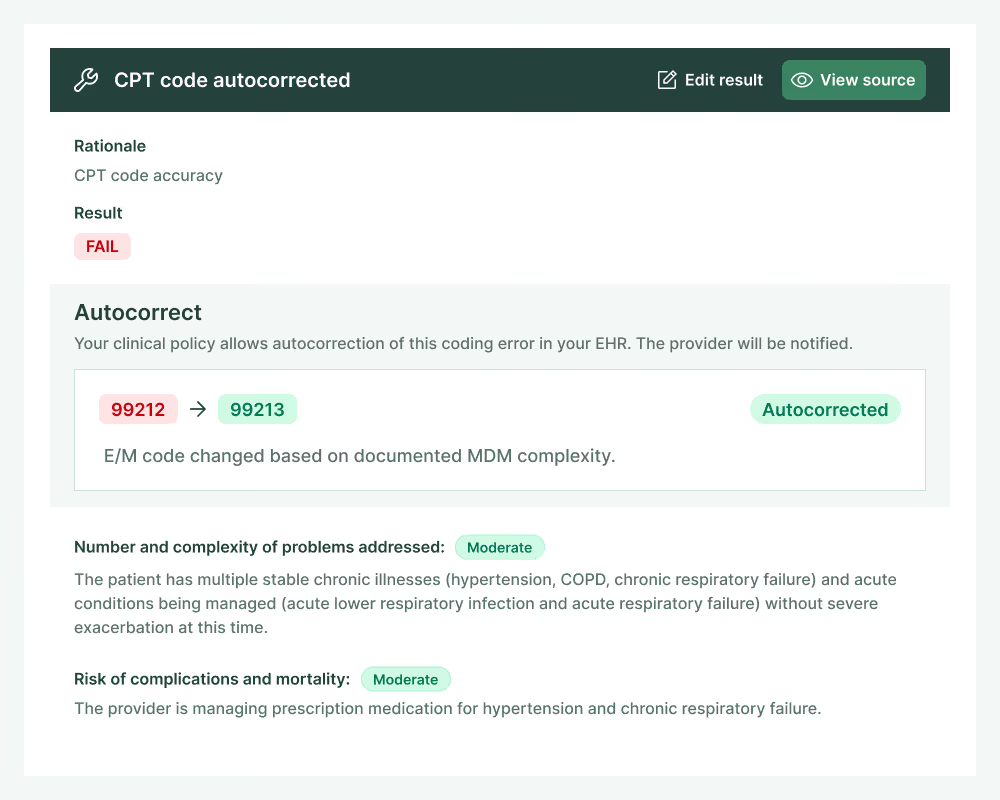
Charta reviews all documentation immediately after note submission to completely and accurately code every service.
End coding-related revenue leaks
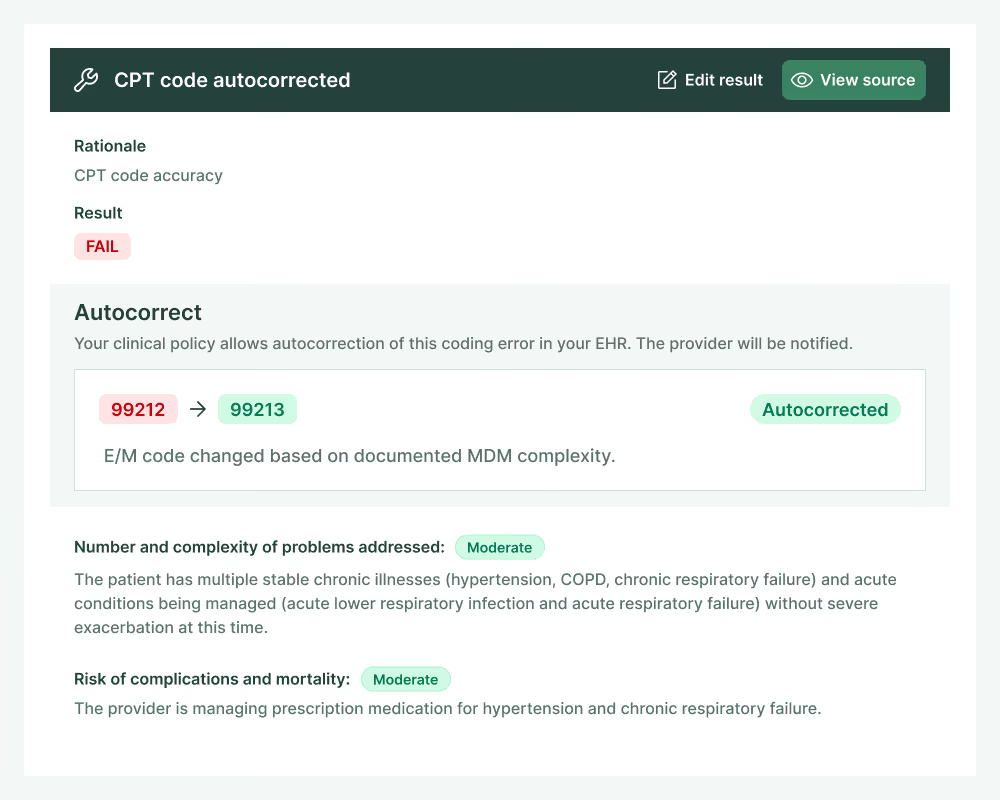
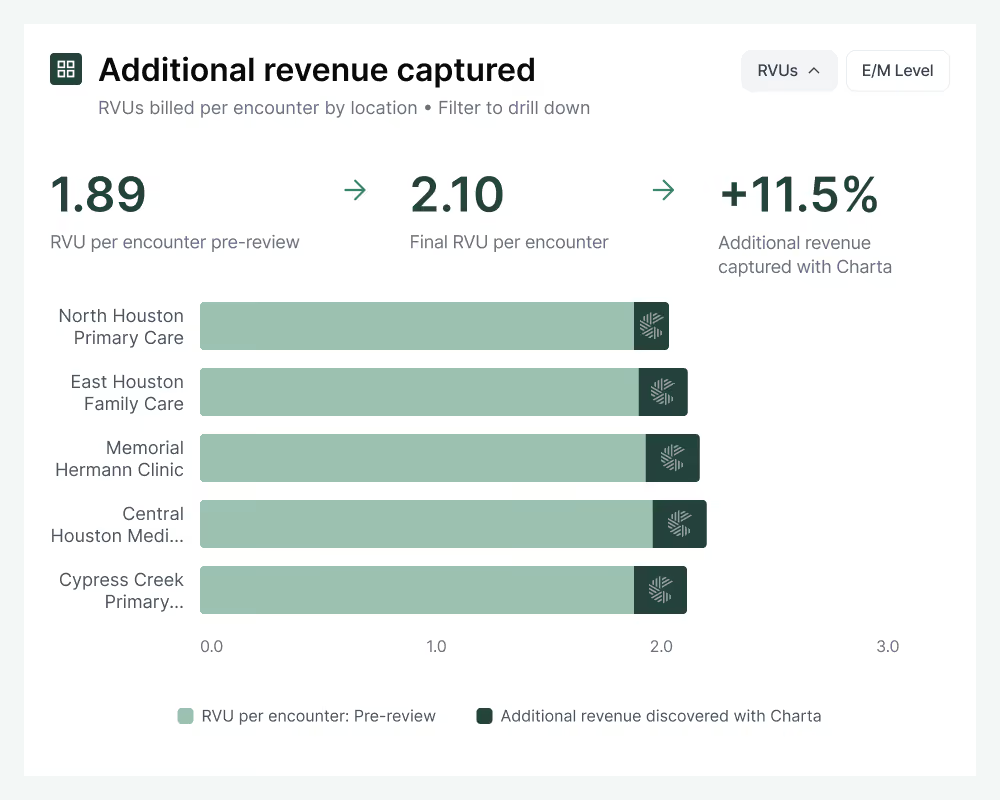
Charta detects and corrects missed revenue opportunities by ensuring you code every service delivered, and verifies that E/M codes are billed at the highest defensible level.

Get peace of mind and greater control
By catching coding errors and documentation gaps pre-billing, Charta shifts your compliance strategy from reactive to proactive. Address issues while charts are still open, eliminating preventable denials and audit exposure.
Real-time provider feedback
Comprehensive analysis of every encounter gives clinical leaders actionable data on supporting quality measures, identifying care gaps and improving documentation quality. Automated feedback loops help providers improve in real-time, raising the quality of care and clinical records simultaneously.
Higher ROI and greater insights into risk adjustment
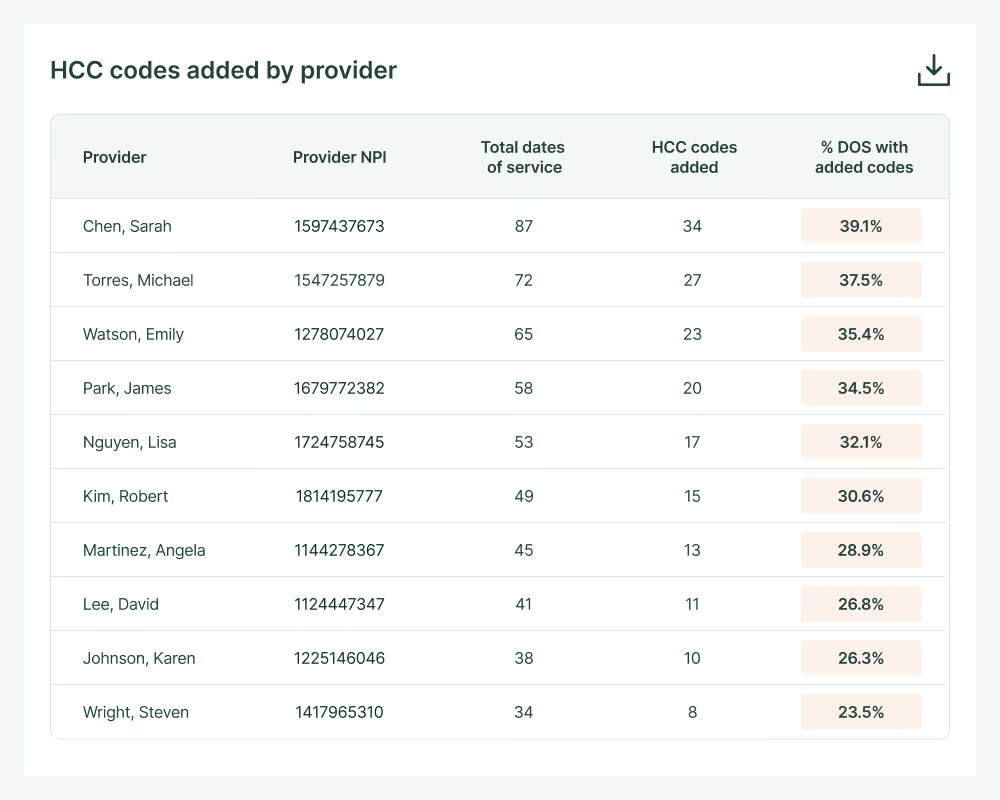
Charta's AI analysis identifies missed opportunities supported by clinical documentation, providing reviewers with direct citations to accelerate validation. The result: higher accuracy, faster turnaround, and reduced cost per chart reviewed.
Autonomous coding
Instant, accurate codes for every encounter
Charta reviews all documentation immediately after note submission to completely and accurately code every service.
Revenue discovery
End coding-related revenue leaks
Charta detects and corrects missed revenue opportunities by ensuring you code every service delivered, and verifies that E/M codes are billed at the highest defensible level.
Payer compliance
Get peace of mind and greater control
By catching coding errors and documentation gaps pre-billing, Charta shifts your compliance strategy from reactive to proactive. Address issues while charts are still open, eliminating preventable denials and audit exposure.
Clinical quality
Clinical quality analytics across every encounter
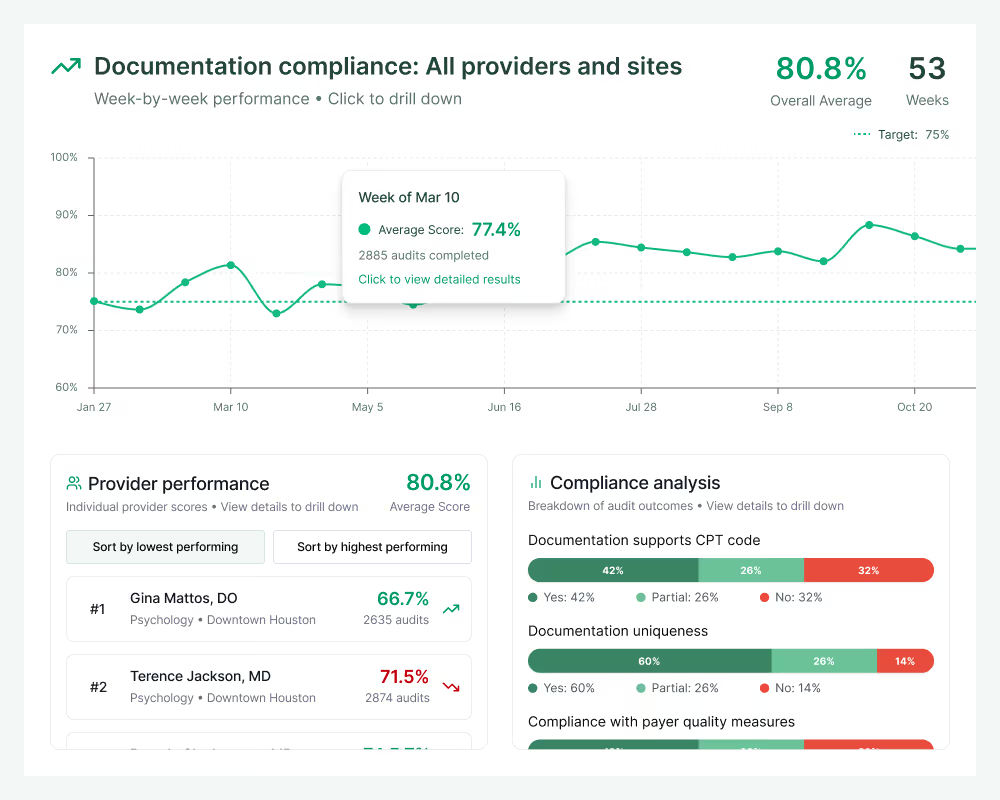
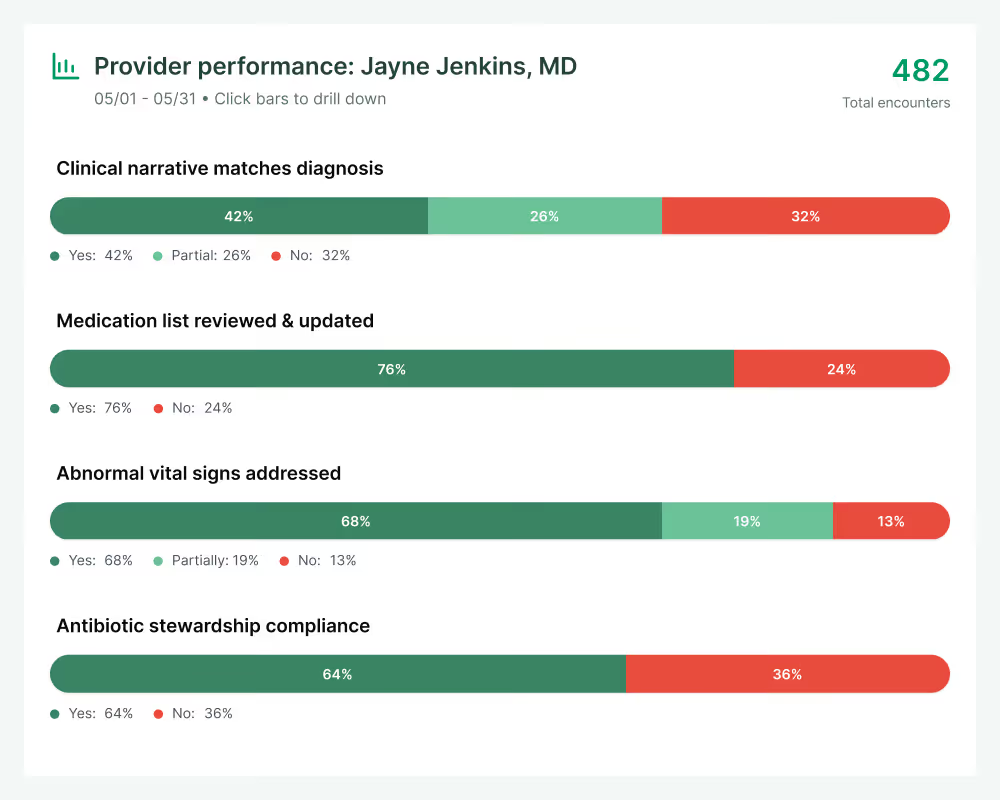
Charta's clinical quality analytics give clinical leaders actionable data on quality measures across every encounter, identifying care gaps and improving documentation quality. Automated feedback loops help providers improve in real time, raising the quality of care and clinical records simultaneously.
Risk adjustment
Higher ROI and greater insights into risk adjustment
Charta's AI analysis identifies missed risk adjustment coding opportunities supported by clinical documentation, providing reviewers with direct citations to accelerate validation. The result: higher accuracy, faster turnaround, and reduced cost per chart reviewed.